


Lord's Day
Morning Worship Service (10:30 am)
Click on the links below for:
- Livestream
- Pandan Weekly & Order of Worship
- Past MWS sermons
- Location map
Junior Worship
Children will leave for Junior Worship after the Chairman's instruction. Only 1-parent to pick-up your child after service, please.
Pre-Primary (2 to 6 Year Olds)
2 to 3-year olds* - #04-03 Tiny Tots Room
4-year olds - #01-12 Nursery Room
5-year olds - #01-05 Kindergarten 1 Room
6-year olds - #01-07 Kindergarten 2 Room
*18-month olds are welcome if they can be independent.
Primary (P1 to P6): Upon dismissal by Chairman, please go to the JW Sanctuary for singspiration (except 3rd Sundays) prior to lessons.
Primary 1 - #03-05
Primary 2 - #03-06
Primary 3 - #03-07
Primary 4 - #03-08
Primary 5 - #04-05
Primary 6 - #04-06
Bible Study
Adult Bible Classes (ABC)
12:15 pm to 1:00 pm.
(a) 1 John. Eld Chew Chong Kiat. AV Studio #02-05 to 07.
(b) Nehemiah. Eld Ko Swee Chay / Dn Yap Wai Ho. Back of Main Sanctuary.
Young People's Group (YPG)
12:15 pm to 1:00 pm.
Book of Esther. Rev Joshua Yong. Level 3 New Sanctuary.
Filippino Bible Study
2:00 pm to 3:30 pm (4th Sunday).
Bro Carlo Igot. Church Lounge #02-14.
Queries? Contact Sis Celina @ 8388-2269.
Myanmese Bible Study
2:30 pm to 3:30 pm.
Bro Htin Htut. Zoom video conference.
Queries? Contact Bro Arthur @ 9768-3101 or Bro Htin Htut @ 8648-7289.
Indonesian Bible Study
10:00 pm to 11:00 pm.
Bro Zakhariah. Zoom video conference.
Queries? Contact Bro Zakhariah @ +62-813-5500-2815.
OTHER ACTIVITIES
Tabernacle Books
9:30 am to 10:15 am
12:15 pm to 1:00 pm
5:00 pm to 5:45 pm
7:00 pm to 7:30 pm
Library
12:15 pm to 1:00 pm
#03-04
Sunset Gospel Hour (6:00 pm)
Click on the links below for:
- Livestream
- Order of Worship
- Past SGH sermons
- SGH Schedule
- Location map
SGH Children's Programme
For 4 to 9-years old at #02-03 (JW Sanctuary).
Only 1-parent is to drop-off/pick-up your child at the JW Sanctuary before/after Sunset Gospel Hour.
Livestream Links and
Order of Worship
For a convenient 1-page quick reference guide with the schedule and links to our live streaming services for Morning Worship, Sunset Gospel Hour, Tuesday Bible Study & Prayer Meeting and Church Bible Study, click HERE.
For a convenient 1-page quick reference guide with the schedule and links to our live streaming services for Morning Worship, Sunset Gospel Hour, Tuesday Bible Study & Prayer Meeting and Church Bible Study, click HERE.
Welcome
We warmly welcome all - both members of the church and non-members - to join us for worship. For information on services and activities conducted in Mandarin, please visit our Chinese website by clicking HERE.
We warmly welcome all - both members of the church and non-members - to join us for worship.
For information on services and activities conducted in Mandarin, please visit our Chinese website by clicking HERE.
Announcementsကြေငြာချက်များPemberitahuan
Activities
Fri 24 Jul 8.00 pm. Bible Study for Every Christian (BSEC): Deuteronomy 16:1-22 (Quiz). Pastor Quek Suan Yew. Church Level 3, New Sanctuary. Queries: Contact Dn Bo Thong @ 9818-6892.
Sat 25 Jul 2:30 pm. Calvary Mission to Children (CMC): Church. Need transportation to and from CMC? Contact Bro Arthur @ 9768-3101. Other queries? Contact Dn Vincent Teo @ 9732-1813.
Sat 25 Jul 5:00 pm. Combined Youth Fellowship (YF) - Adults Fellowship (AF): "The Contented Mindset". Rev Joshua Yong. Church Main Sanctuary. Queries? YF: Contact Rev Joshua Yong @ 9190-4677 for more information; AF: Contact Dn Saravanan @ 9747-7594 or Elder Chew @ 9771-9440 for more information.
Sun 26 Jul 12:15 pm to 1:00 pm. Basic Bible Knowledge: Lesson 3: Man. JW Sanctuary #02-03. Rev Quek Suan Yew. Please register by completing the "Basic Bible Knowledge (BBK) Class" form available in class or online HERE. Submit the completed form to Dn Eric in-person or via email by clicking HERE.
Sun 26 Jul 12:15 pm to 1:00 pm. Adult Bible Classes (ABC): (a) 1 John. Eld Chew Chong Kiat. AV Studio #02-05 to 07. (b) Nehemiah. Eld Ko Swee Chay / Dn Yap Wai Ho. Back of Main Sanctuary.
Sun 26 Jul 12:15 pm to 1:00 pm. Young People's Group (YPG): Book of Esther. Rev Joshua Yong. Church Level 3 New Sanctuary.
Sun 26 Jul 2.00 pm. Teens Monthly Retreat. "We Ought To Lay Down Our Lives For The Brethren" (1 John 3:16-18). Dn Adrian Ho. JW Sanctuary, Level 2.
Sun 26 Jul 2.00 pm. Filipino Ministry Bible Study. "Who Can Forgive Sin?" (Matthew 9:1-8). Bro Carlo Igot. Room #02-14 (Church Lounge). Query: Contact sis. Celina Lee @ 8388-2269
Sun 26 Jul 2.00 pm. Tracts Ministry. "Faith in Christ Alone" (Ephesians 2:8-9). Dn Yap Wai Ho. Room #02-10 (New Cryroom). Followed by door-to-door evangelism at 3pm.
Tue 28 Jul 8:15 pm to 9:45 pm. Tuesday Bible Study & Prayer Meeting: "Circumstances – God’s Directive Will " (Genesis 43:1-7). Pastor Quek Suan Yew. Main Sanctuary & Livestream (click HERE).
Wed 29 Jul 1.00 pm. Ladies Bible Study. Book Study of Jeremiah. Rev Quek Suan Yew. Room #02-14 (Church Lounge).
Sat 1 Aug 2:30 pm. Calvary Mission to Children (CMC): Church. Need transportation to and from CMC? Contact Bro Arthur @ 9768-3101. Other queries? Contact Dn Vincent Teo @ 9732-1813.
Sat 1 Aug 4:45 pm. Church Bible Study Quiz: A simple MCQ quiz based on the previous CBS message. Church Main Sanctuary.
Sat 1 Aug 5:00 pm. Church Bible Study: "To Love is to Know God". Pastor Quek Suan Yew. Church Main Sanctuary & Livestream (click HERE).
Sun 2 Aug 12:15 pm to 1:00 pm. Basic Bible Knowledge: Lesson 4: Sin. JW Sanctuary #02-03. Rev Quek Suan Yew. Please register by completing the "Basic Bible Knowledge (BBK) Class" form available in class or online HERE. Submit the completed form to Dn Eric in-person or via email by clicking HERE.
Sun 2 Aug 12:15 pm to 1:00 pm. Adult Bible Classes (ABC): (a) 1 John. Eld Chew Chong Kiat. AV Studio #02-05 to 07. (b) Nehemiah. Eld Ko Swee Chay / Dn Yap Wai Ho. Back of Main Sanctuary.
Sun 2 Aug 12:15 pm to 1:00 pm. Young People's Group (YPG): Book of Esther. Rev Joshua Yong. Church Level 3 New Sanctuary.
Tue 4 Aug 8:15 pm to 9:45 pm. Tuesday Bible Study & Prayer Meeting: "Trust God in the Honourable Way" (Genesis 43:8-14). Pastor Quek Suan Yew. Main Sanctuary & Livestream (click HERE).
Teachers' Training
| Date: | Sun 9 Aug |
| Time: | 1:30 pm to 3:30 pm |
| Speakers: | Joycelyn Chng |
| Venue: | Main Sanctuary |
Open to all who are interested in learning abotu teaching God's Word to children. Teachers are encouraged to attend.
Golden Years Fellowship(GYF) Retreat
| Dates: | Thu 15 Oct to Sat 17 Oct |
| Theme: | The Christian Race - A Race of Faith (Hebrews 12:1-2) |
| Speakers: | Rev Lim Seh Beng Eld Ko Swee Chay Rev (Dr) Quek Suan Yew |
| Venue: | Four Points by Sheraton Jurong |
Earliy-bird subsidised fees for church members and GYFers:
- Twin Occupancy (3D2N): $290 per person
- Single Occupancy (3D2N): $360 per person
(Early bird registration deadline: 9 Aug)
Register with Sis Julie Lim or Sis Fiona Lee during lunch at the Fellowship Hall on Sundays between 12 Jul and 30 Aug. Queries? Contact Bro Puay Yong @ 9731-2372 or Dn Chia Chung Seng @ 9698-4418.
Church Camp 2027

Mon 14 to Sat 19 Jun 2027
Save the date!
Lunch Coupon Sales
The queue for purchasing lunch coupons closes at 10:25 am. This allows those on lunch coupon duty to join the Morning Worship Service on time. There are separate queues for:
Complimentary Coupons: For those at least 60-years old, FEBC students, and other eligible worshippers. Loved ones and friends may collect on their behalf.
Paid Coupons: All other worshippers. Please have exact change.
If you obtained lunch coupon(s), but subsequently decided to lunch elsewhere, please pass the unused coupon(s) to the group on kitchen duty. This will free the lunch box(es) reserved for you to be given to anyone who might need them.
Printed Copies of A4-Sized
Pandan Weekly with Hymns
The larger printed A4-sized Pandan News Weekly with hymns included are primary for elderly worshippers to aid them in worship. Thank you for giving priority to our elderly worshippers.
 Christian Fellowship and
Mutual Encouragement
If you know of any need, or would like to arrange a time of Christian fellowship and mutual encouragement, or sharing of the Gospel for yourself, your family or someone you know, please feel free to reach out to Dn Adrian Poh @ 9030-5803, Dn Chin Bo Thong @ 9818-6892 or Sis Tham Chai Hoon @ 9698-0144
Alternatively, click on or scan the QR code to submit a form to let us know. The Church Visitation Ministry would be most happy to get in touch with you to arrange for a visit at a suitable time and venue. Our regular visitation is on every 4th Saturday afternoon. Visitation can also be arranged on other days if need be.
Vigil Service Arrangements
If in need of practical guidance in time of bereavement - what to do, where to go, who to call - please click HERE.
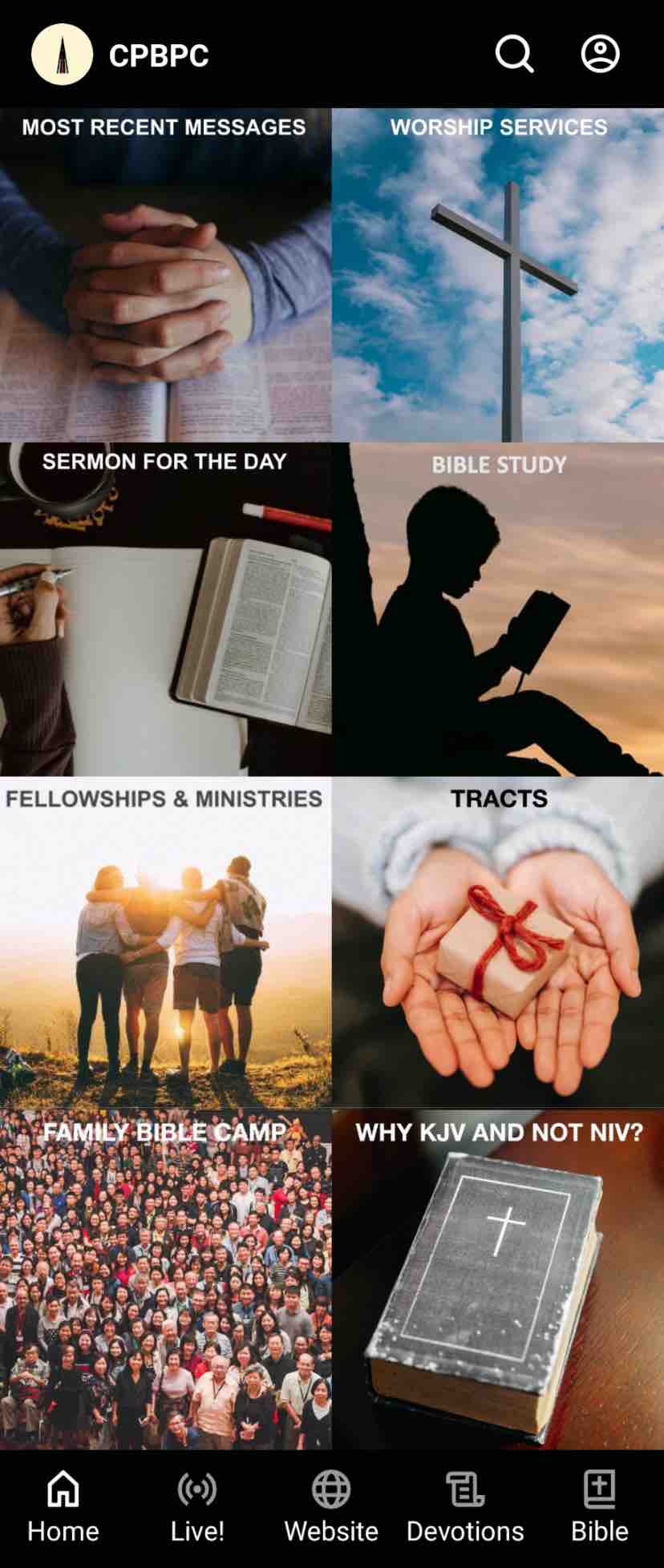 Mobile App
Install the CPBPC mobile app on your handphones and tablets. Click HERE for installation instructions.

Join these Telegram channels:
- Calvary Pandan: Click HERE.
- KJV Audio: Click HERE.
- Sermon for the Day: Click HERE.
- Adult RPG: Click HERE.
- Daily Remembrancer: Click HERE.
- Rise Up Men of God: Click HERE.
- Pandan Mothers' Group: Click HERE.
Click HERE for a convenient 1-page PDF guide of all our English and Chinese channels.
Join these Telegram channels:
- Calvary Pandan: Click HERE.
- KJV Audio: Click HERE.
- Sermon for the Day: Click HERE.
- Adult RPG: Click HERE.
- Daily Remembrancer: Click HERE.
- Rise Up Men of God: Click HERE.
- Pandan Mothers' Group: Click HERE.
Click HERE for a convenient 1-page PDF guide of all our English and Chinese channels.
 "1QR": One Code, Many Uses
Introducing 1QR, a single QR code for multiple resources: (1) Pandan News Weekly, (2) SGH order of worship, (3) CBS lesson notes, (4) Registration for events, (5) Live streaming quick reference guide, (6) Telegram channels quick reference guide, and (7) Children's ministries brochure.
Click on or scan the QR code in this announcement, scan the QR code on the pews in the Main and New Sanctuaries, or go to https://go.calvarypandan.sg/1qr
Tithe and Offerings
For worshippers attending via live streaming, you may use the following ways to give your tithes and offerings:
- By Cheque: Post your gift in cheque form, payable to “Calvary Pandan Bible-Presbyterian Church”, to 201 Pandan Gardens, Singapore 609337.
- By Bank Transfer: Make a bank transfer to HSBC Bank code: 7232, Bank current account no.: 150-055911-001, Account name: Calvary Pandan Bible-Presbyterian Church.
- By Online Payment Application:
- Open any of the following bank's online payment application in your mobile phone.

-
- Scan the QR code below using the bank's QR code reader and proceed according to the instructions in the app.
 Calvary Pandan's UEN:T03SS0125DHSB
(This information is needed for PayNow)
God bless every cheerful giver.
Read, Pray and Growဖတ်ရှုပါ၊ ဆုတောင်းပါ၊ ကြီးထွားပါTerang Alkitab
RPG Booklets
Click HERE for past, present and future quarters of RPG booklets in English, Simplified Chinese, Indonesian and Myanmese. The files are in PDF format, which are readable on phones, tablets and computers.
Salvationကယ်တင်ခြင်း
How Can I Be Saved?
This is the most vital and crucial question that each one of us must face, for if a person is not saved, then he is lost, condemned to eternal punishment.
ကျွန်တော်မည်သို့ကယ်တင်ခြင်းခံရပါမည်နည်း?
ဤမေးခွန်းသည်မရှိမဖြစ်လိုအပ်သောအလွန်အရေးကြီးသည့်လူတိုင်းရင်ဆိုင်ရမည့်မေးခွန်းဖြစ်ပါသည်။ အကြောင်းမူကား အကယ်၍တစ်စုံတစ်ဦးသည်ကယ်တင်ခြင်းမရခဲ့လျှင်ထိုသူသည်ဆုံးရှုံးခြင်းသို့ရောက်ပြီးထာဝရပြစ်ဒဏ်၌စီရင်ပြစ်တင်ခြင်းကိုခံရမည်ဖြစ်သည်။
ကယ်တင်ခြင်းကို မည်ကဲ့သို့ ရရှိမည်ဟုသိလိုလျှင် ဒီမှာ နှိပ်ပါ ။
အကြောင်းမူကား
“အကြောင်းမူကား” ဟူသော ဤစာစောင်သည် နယူးဇီလန်နိုင်ငံသားစီးပွားရေးသမားတစ်ဦးဖြစ်သော Robert A Laidlaw က မိမိရုံးလုပ်သားတို့အားကယ်တင်ခြင်းခံရစေခြင်းငှါအလေးထားသောစိတ်ဖြင့်ရေးသားသော၊ အလွန်စိတ်ဝင်စားစရာကောင်းသော သတင်းကောင်းရှင်းလင်းအနက်ဖွင့်ခြင်းဖြစ်ပါသည်။
ဤစာစောင်က ထောင်သောင်းမက များစွာသောလူတို့အား ယေရှုခရစ်တော်၌ ကယ်တင်ခြင်းခံရခြင်းငှါ ကူညီပေးခဲ့ပြီး၊ များစွာသောလူတို့၏ အသက်တာကို ပြောင်းလဲ စေခဲ့ပါသည်။ ဤစာစောင်ကို၁၉၆၉ ခုနှစ်အထိ ဘာသာစကား ၃၀ ကျော်ဖြင့် အစောင်ရေ ၁၆ သန်းကျော်ပုံနှိပ်ထုတ်ဝေခဲ့ပြီးဖြစ်ပါသည်။
ဤစာစောင် PDF ဖိုင်ကိုဒေါင်းလုဒ်ရန် ဒီမှာ နှိပ်ပါ။